Your cart is currently empty.

Tonally, Terry Gilliam seems to have had a lot less to do with Monty Python’s success than much of the rest of the troupe. The TV work that first rocketed them to fame was more built around the clash of staid British stereotypes, devolving into absurdist nonsense. John Cleese, Michael Palin, Terry Jones, and Graham Chapman often felt like the dominant voices in their writing room.
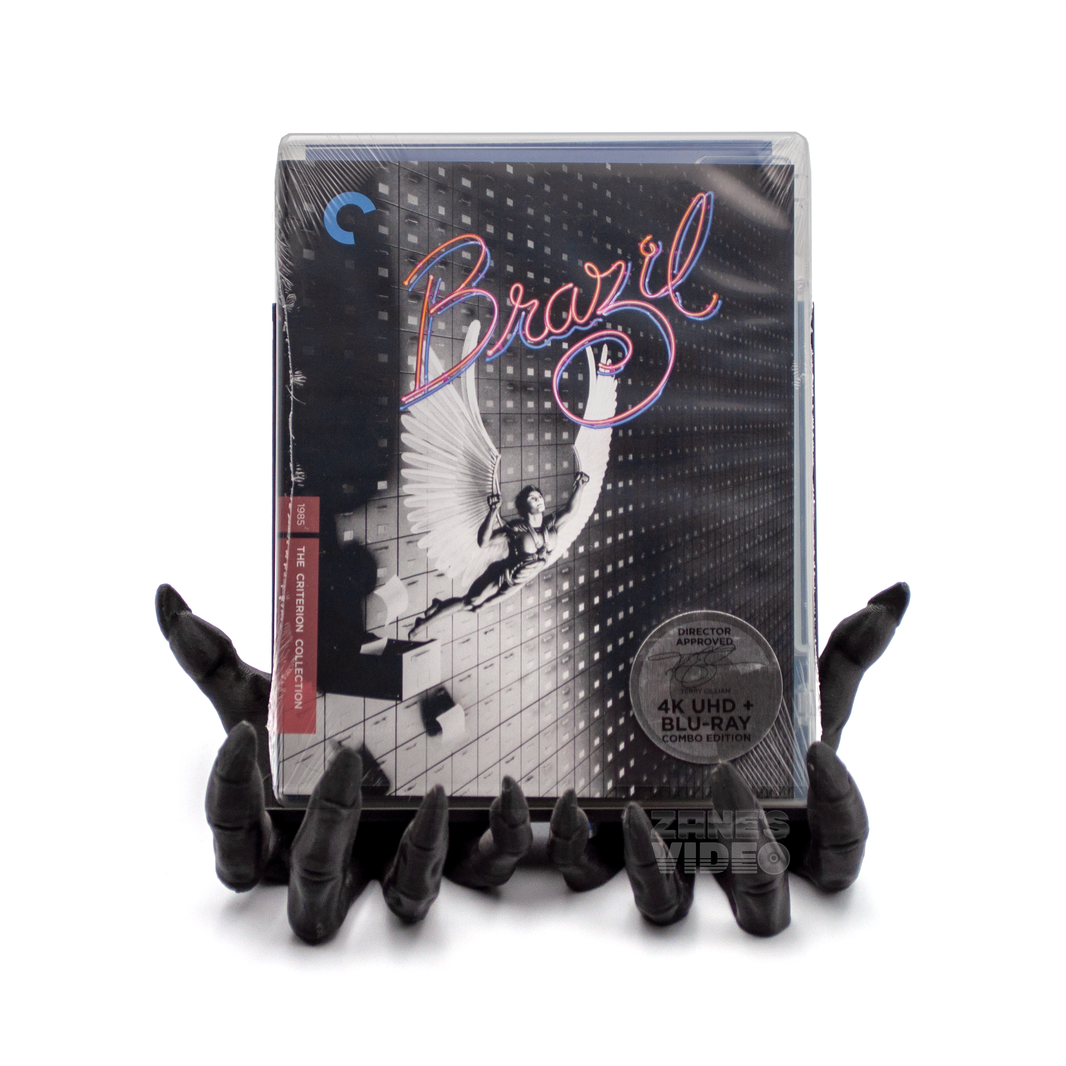
When it came to their cinematic presence, however, Terry Gilliam loomed large. Gilliam’s ultra-realist brand of surrealism—busy, overflowing sets and costumes that manage to convey something almost otherworldly while, at the same time being steeped in a sort of earthy normality—gave movies like The Life of Brian and Meaning of Life a signature style to go with Python’s signature laughs. It’s that style that carried over clearer than anything into Terry Gilliam’s solo career, and nowhere stronger than in his sci-fi masterpiece, Brazil.
Set in a futuristic megacity, Brazil tells the tale of a low-level bureaucrat who, through a clerical error, becomes enmeshed in a terrorist plot. That setting makes this one of the first films to present dystopia as a product of corporatization and bureaucracy, rather than pure computing/atomic age advancement. As such, Brazil stands as Gilliam’s most far-reaching and influential work, a cornerstone in our understanding of dystopian science fiction.
Use collapsible tabs for more detailed information that will help customers make a purchasing decision.
Ex: Shipping and return policies, size guides, and other common questions.
Use collapsible tabs for more detailed information that will help customers make a purchasing decision.
Ex: Shipping and return policies, size guides, and other common questions.
Use collapsible tabs for more detailed information that will help customers make a purchasing decision.
Ex: Shipping and return policies, size guides, and other common questions.
We will send you an email to reset your password
Your cart is currently empty.